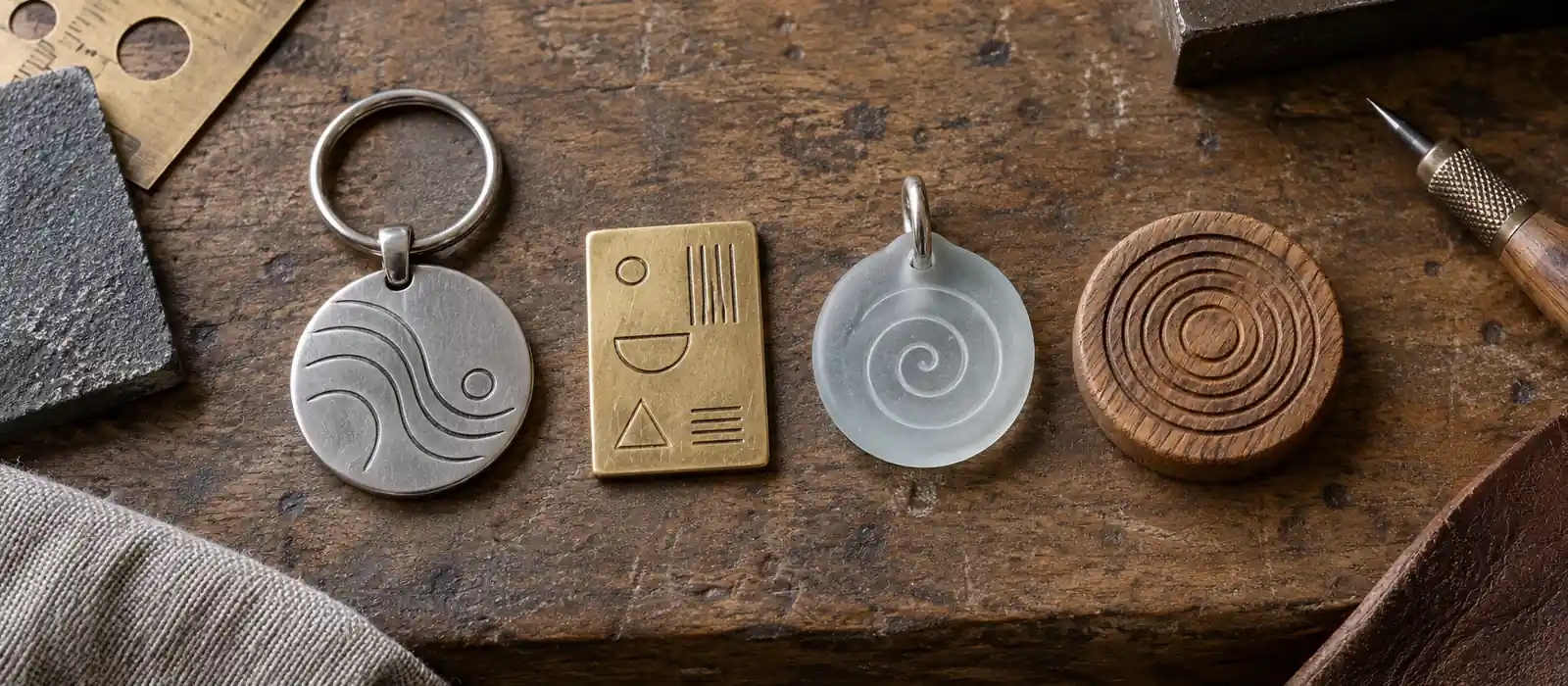
Different types of wall art
Flat art, relief, textile and object — four families of wall art that behave differently in a room, with a note on why tapestry was once the most valuable thing a family owned.
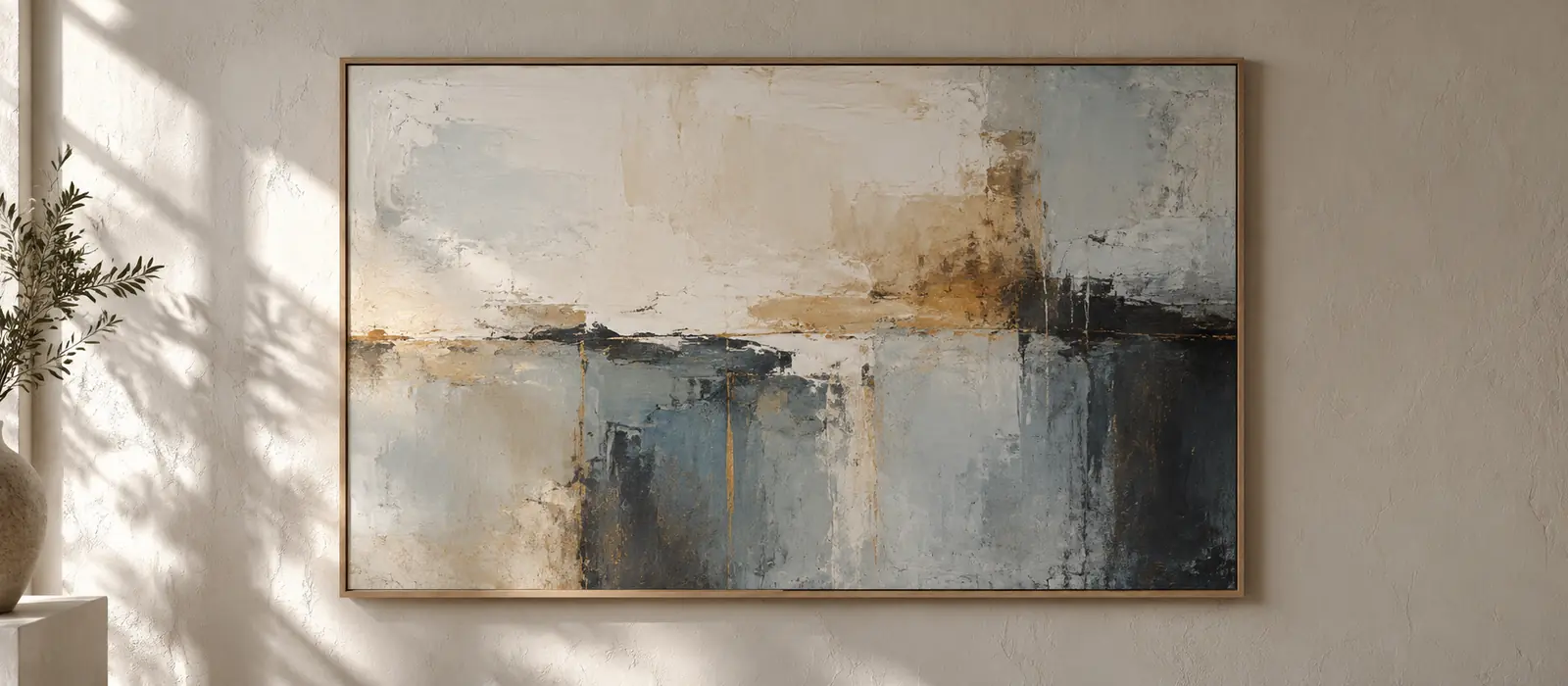
“Wall art” is treated as a single category and behaves as four. What separates them is not subject or style but how much they project from the wall, because that is what decides how they respond to light and how a room reads at an angle.
Flat art
Paintings, prints, photographs, posters, framed textiles under glass. The largest family and the easiest to live with.
Flat art has one significant weakness: under glass, it reflects. A framed print opposite a window is often unviewable for half the day, and the answer is either non-reflective glazing or a different wall. Unframed canvas avoids the problem entirely, which is part of why it became the default for large domestic pieces.
Prints are also the reason wall art stopped being a rich person’s category. A good reproduction puts a famous image on a wall for the price of the frame — which is a straightforward democratisation, and worth stating plainly rather than apologising for.
Relief and three-dimensional work
Anything that projects: carved panels, plaster and resin reliefs, metal sculpture, ceramic installations, decorative plates.
Relief works because it casts shadows, and shadows change through the day. A relief panel lit from one side at breakfast and from the other in the evening is two different objects. Flat art is not. That effect has been used since Greek and Roman architectural relief, and it is still the most reliable way to make a wall look considered rather than decorated.
The cost is that relief needs raking light. Lit flat and head-on, it collapses into a grey texture.
Textile
Tapestries, woven hangings, quilts, rugs hung as art, embroidered panels.
Textile does two things nothing else does: it absorbs sound, and it moves slightly in the air of a room. A large hanging changes a room’s acoustics measurably, which is why it turns up in rooms with hard floors and plaster walls.
Historically, textile was the top of the hierarchy. In medieval Europe tapestries were symbols of wealth and status — portable, expensive, and depicting mythology, history and daily life. The Bayeux Tapestry is the emblematic survivor: about 70 metres long, made by English embroiderers for a probably Norman patron, working from manuscript drawings from Canterbury, and depicting the events leading up to the Battle of Hastings and the Norman Conquest of 1066. It is technically an embroidery, not a woven tapestry — the design is worked onto the cloth rather than into it.
It survives as the only complete example of its kind, though written sources make clear that hangings of this type were a popular way for families to record their stories and deeds. One reading of it is as an immersive installation: something you walked along rather than stood in front of.
Object
Mirrors, clocks, shelves treated as composition, hats, plates, instruments, signs — anything hung for its shape rather than its image.
Mirrors are the workhorse here, because they are the only wall object that adds light and apparent depth rather than consuming them. A mirror opposite a window brightens a room twice: once by reflecting the light, again by showing an outside view on an interior wall.
Objects also carry personal history in a way images generally do not, which is the whole subject of personalising a home on a budget.
Mixing the four
A wall of only flat art reads as a catalogue. A wall of only objects reads as a junk shop. The gallery walls that work almost always mix families — a couple of framed pieces, one relief or object, something with texture — held together by a shared palette or a shared frame colour, and by consistent spacing.