How to personalise your home on a budget
Personality in a room comes from specificity, not from spending. What is free, what is cheap, and what you need permission for if you rent.
A room full of expensive things can be completely impersonal, and a room full of cheap ones can be unmistakably somebody’s. The variable is not budget. It is specificity — how much of what is in the room could only be in your room.
Start with what you already own
The cheapest personalisation is already in a drawer.
Photographs, letters, tickets, maps of places you have lived, a child’s drawing, an inherited tool, a pressed flower. These fail on walls not because they are unworthy but because they are presented badly: unframed, hung too high, or scattered. Frame them consistently — same frame, same mount colour — and a shoebox of ephemera becomes a wall that no shop could sell you.
Consistent framing is the trick that does most of the work. Mixed contents in matching frames read as a collection. Matching contents in mixed frames read as clutter.
Hang it at the right height
This costs nothing and is the single most common mistake. The gallery convention places the centre of a picture at 57 inches — about 145 cm — from the floor, which is roughly average standing eye level and the reference museums and galleries use.
Domestic hanging is almost always too high. Art hung above eye level floats away from the furniture and stops relating to the room. Above a sofa or bed, ignore the 57-inch line and put the bottom of the frame roughly 15–30 cm above the furniture instead.
Paint is the cheapest transformation there is
A tin of paint changes more square metres per pound than anything else. And it does not have to mean a whole room: a painted arch behind a chair, a block of colour around a door, a band at picture-rail height, the inside of an alcove or the back of a bookcase in a strong colour. All are an afternoon and one small tin.
Things that carry a mark
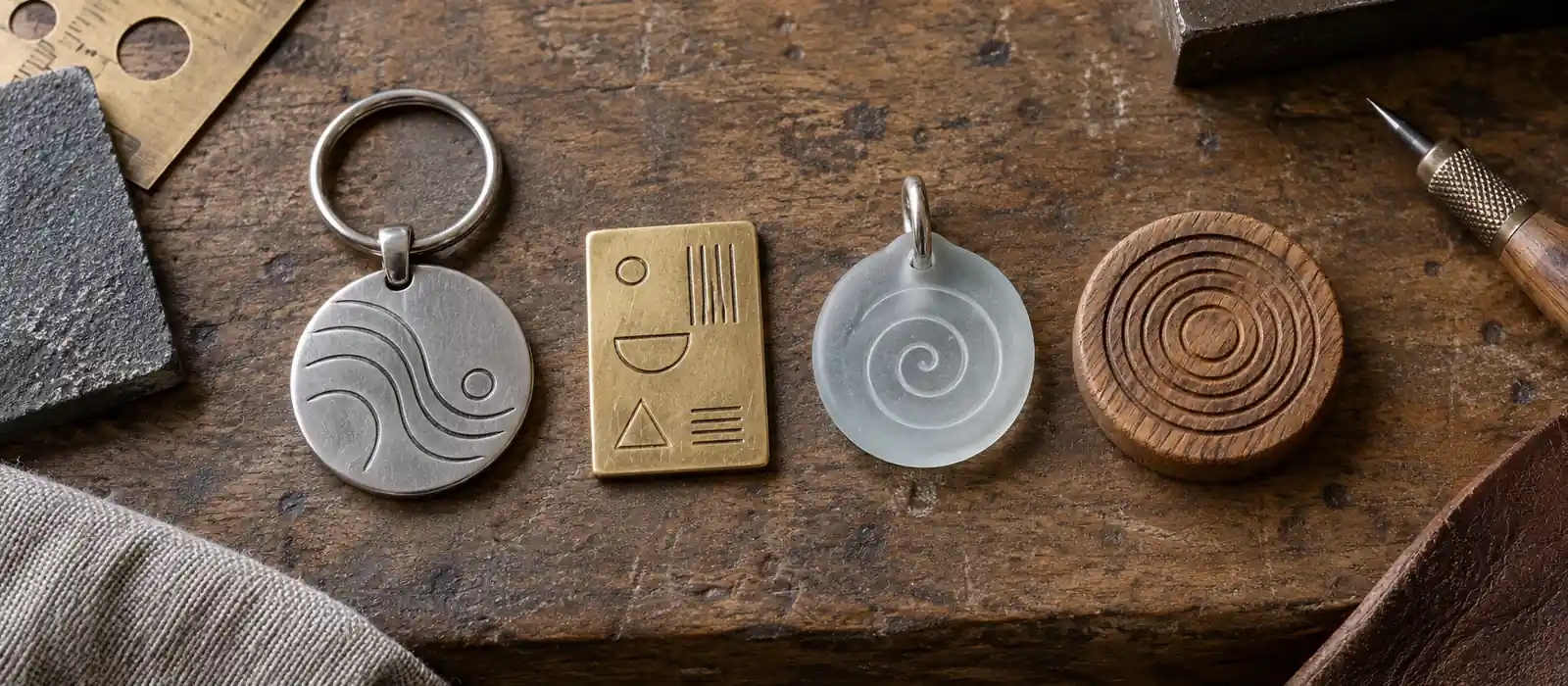
Personalisation in the literal sense — a name, a date, an inscription — is what turns an ordinary object into a specific one. It is also why an inherited engraved item survives house moves that better furniture does not: the mark makes it un-substitutable.
The same logic works on inexpensive objects. A plain glass or a simple plate with a real inscription outranks an expensive generic ornament, because it refers to something. What makes the mark permanent is covered in techniques.
If you rent, check first
This is the part that is skipped and then costs a deposit.
Private tenants usually need the landlord’s permission to paint or redecorate. Council and housing association tenants can usually paint and decorate their homes, but private tenancies are different, and some agreements forbid decorating outright. The Renters’ Rights Act 2025 changed a great deal in the private rented sector, but it did not create a general right for tenants to decorate without permission.
Practical sequence:
- Read the tenancy agreement before buying anything.
- Ask, and get the answer in writing. Many landlords agree, particularly with long-term tenants, and the written record is what protects you later.
- Expect a reinstatement condition. A common agreement is that changes are approved in advance and the property is returned to its original state at the end.
- Photograph the original condition on the day you move in.
Reversible options if the answer is no, or if asking is not worth it: freestanding shelving, leaning framed art on a shelf or mantel rather than hanging it, rugs, lamps, textiles, plants, and removable hooks rated for the weight of what you are hanging. None of them touch the fabric of the building, and all of them change a room.