Silver and silver-plated pieces
Why silver is the engraver's material, what sterling actually means, how plate behaves differently under a graver, and where the law steps in.
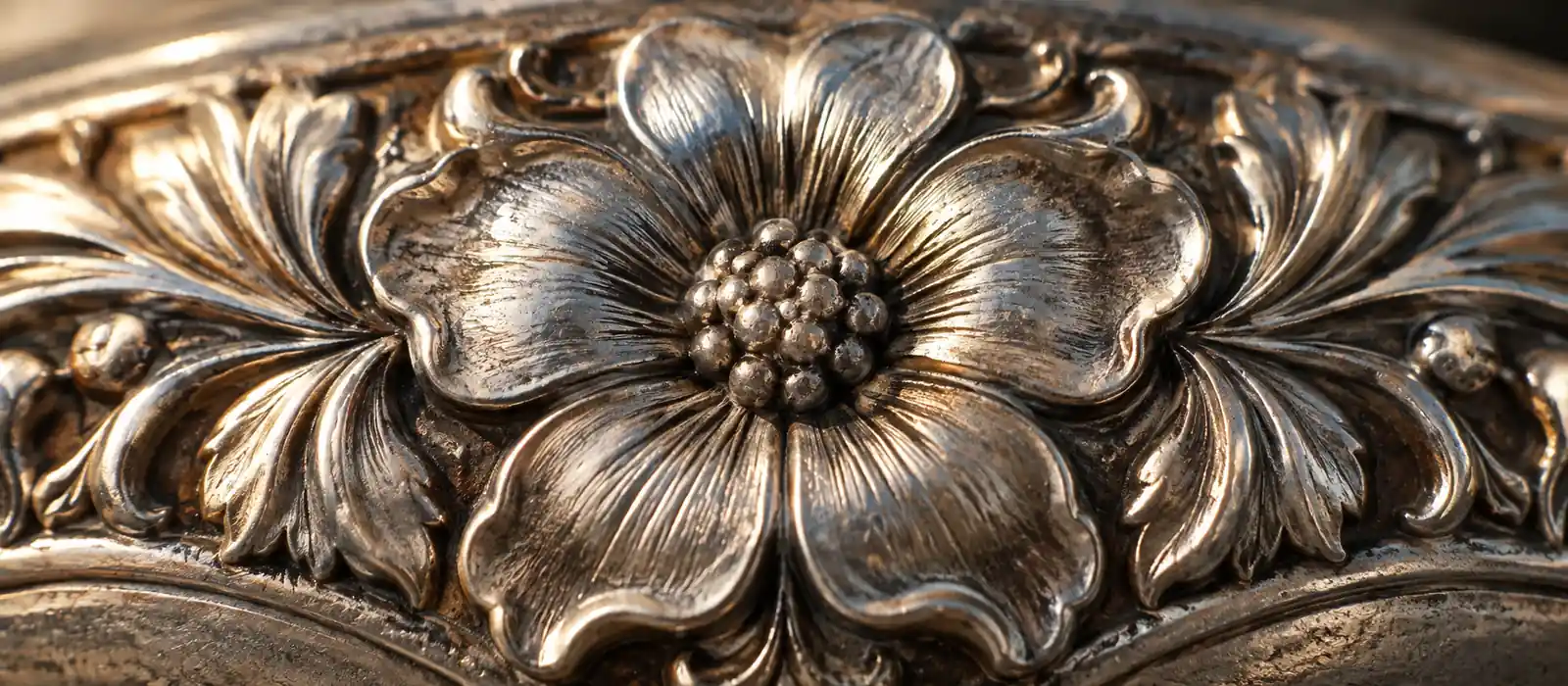
Silver is the material the engraving trade is built around, for a reason that is purely mechanical: it is soft enough that a graver moves through it smoothly, and bright enough that the freshly cut facet flashes against the surrounding surface. Harder metals fight the tool; softer ones tear. Silver cuts.
Sterling, fine and Britannia
Pure silver is too soft for objects that get handled, so silver for use is alloyed, and the alloy proportion is what the fineness numbers describe.
- Fine silver, 999 — effectively pure. Beautiful to cut, too soft to keep a crisp edge in service.
- Sterling, 925 — 92.5 % silver, the long-standing British working standard.
- Britannia, 958 — a higher standard, historically mandated for a period and still used.
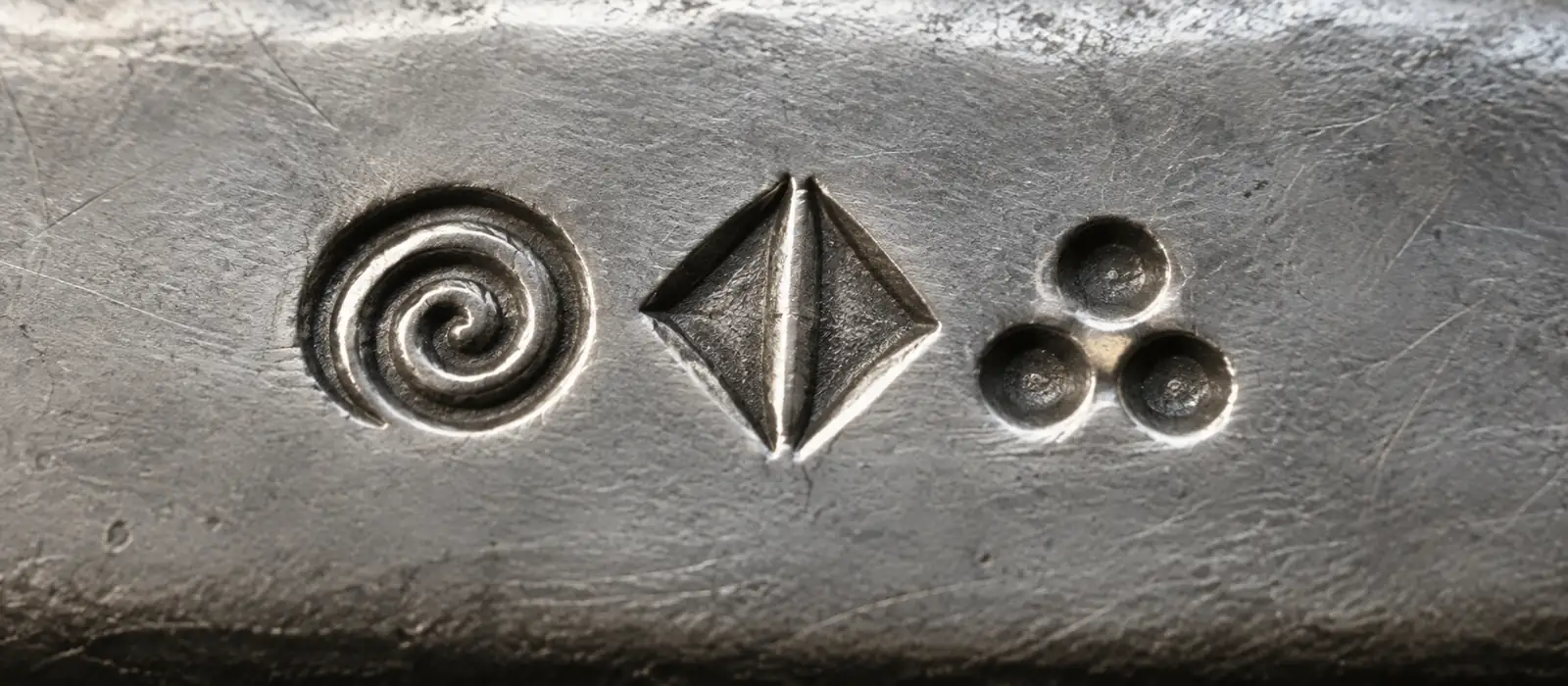
Fineness is not a marketing word in the UK. It is a legally defined figure, and articles described and sold as silver must generally carry an assay office hallmark showing it. The rules, the exemption weights and the marks themselves are on the UK hallmarking page.
Solid silver versus silver plate
This is the distinction that matters most when a piece is going to be engraved, and it is invisible until the tool goes in.
Solid silver is the same metal all the way down. A cut can be as deep as the design wants, and a poorly cut line can be burnished, stoned back and recut, because there is more of the same material underneath.
Silver plate is a thin deposit of silver over a base metal — nickel silver, brass, copper. Cut through it and the base metal shows: a different colour, usually yellower or greyer, and permanently visible. Plated pieces therefore want shallow, controlled work, and they punish recutting. Anyone engraving plate is working within a depth budget set by an invisible layer, which is why an experienced engraver asks what a piece is before touching it.
Pewter behaves differently again — soft, grey, low-melting, and cuts beautifully, but it gives a duller line because it lacks silver’s reflectivity.
Why hand engraving persists here
On silver, the machine processes are all slightly wrong. A rotary cutter leaves a groove with a tool-shaped floor; a laser leaves thermal discolouration on a metal chosen for its brightness. A graver leaves a bright, faceted wall that reflects. On a presentation piece, where the whole point is that the inscription catches the light, that difference is not a nuance.
It also explains why the craft is on the Heritage Crafts register rather than in a museum: there are results here that no current machine reproduces.
Practical points
- Tarnish is sulphur, not dirt. Silver darkens by reacting with sulphur compounds in the air. Engraved lines darken first, because they hold the tarnish, which is why old engraved silver reads as more legible with age, not less.
- Engraving reduces thickness. On a thin-walled piece, deep work is a structural decision.
- Cleaning matters more than polishing. Repeated aggressive polishing removes metal, and on plate it removes the plate. The inscription goes first.