UK hallmarking: what the marks mean
A UK hallmark is a legal declaration of fineness, not a decoration. What the three compulsory marks are, why the date letter is now optional, and what the exemption weight does.
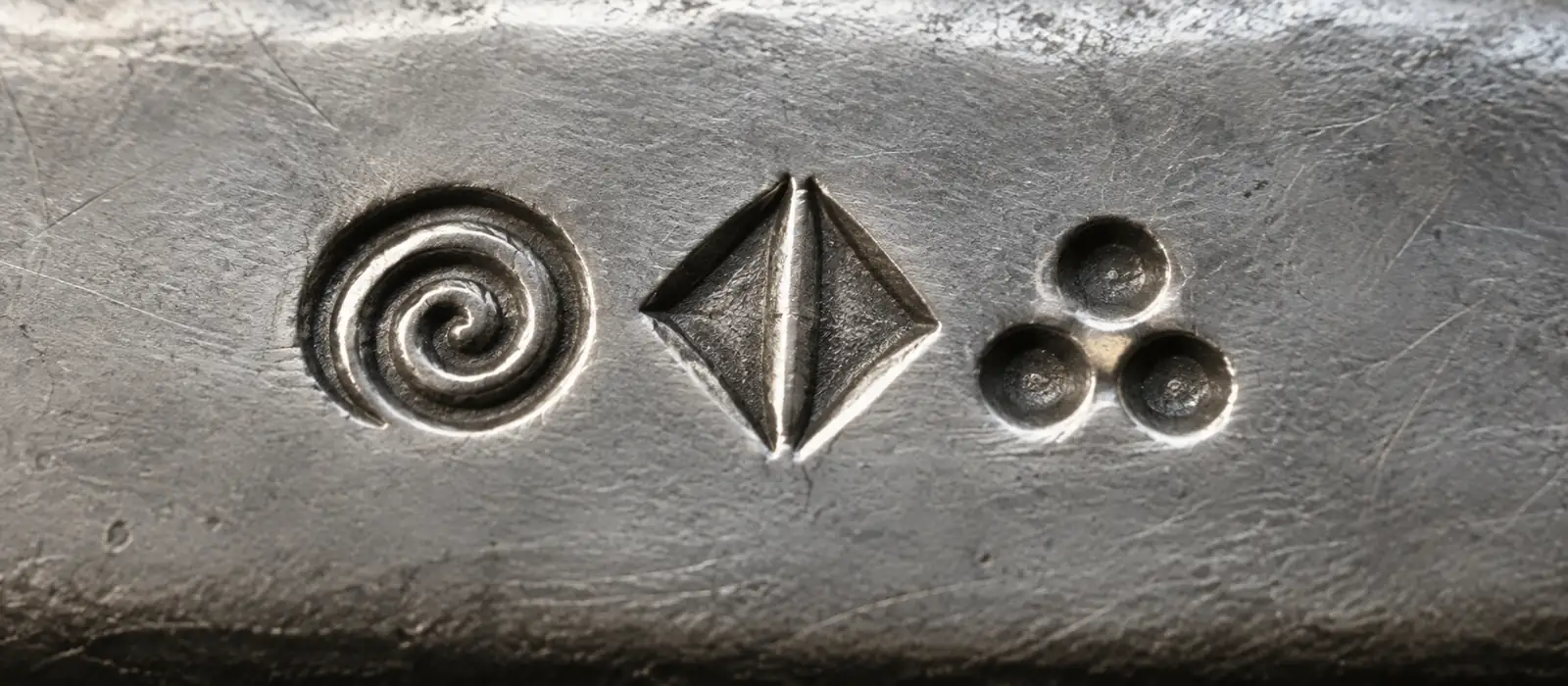
A hallmark is not ornament and it is not a maker’s signature. It is a statement, backed by independent testing and by statute, about what the metal in an article actually is. Everything else on a piece of silver can be asserted by whoever made it; this cannot.
Why it exists
Precious metals are alloyed, so their content cannot be judged by eye. Without independent verification a buyer has no way of knowing whether an article described as silver is 925, 800 or plated base metal. Hallmarking is the oldest form of consumer protection in Britain, and it works by moving the test out of the seller’s hands entirely: an assay office, not the maker, assays the metal and applies the mark.
The modern framework is the Hallmarking Act 1973, which consolidated earlier law and governs the composition, assaying, marking and description of articles made from or containing precious metals — gold, silver, platinum and later palladium.
The three compulsory marks
A complete modern UK hallmark consists of three marks:
- The sponsor’s mark. The registered mark of the person or company submitting the article for assay. It identifies who put the article into the market, which is not always the person who made it.
- The fineness mark. The metal and its purity in parts per thousand — 925 for sterling silver, 958 for Britannia.
- The assay office mark. Which of the UK’s four assay offices tested and struck the article.
The date letter, and why it stopped being compulsory
Until 1999 a fourth mark, the date letter, was also compulsory. It is now voluntary and may be applied in addition to the three compulsory marks.
For anyone dating an object, this is the single most consequential fact on this page. A date letter on a modern piece is a choice, so its absence says nothing about age. On older pieces it remains the most precise dating evidence there is.
The exemption weight
Below a defined weight, articles are not required to be hallmarked. The threshold for silver is 7.78 grams. Other precious metals have their own thresholds, set separately.
The exemption is about weight alone, not about type of article. A light chain and a light plaque are treated the same way. Above the threshold, articles described or offered for sale as precious metal must generally carry a hallmark from a UK assay office before they can lawfully be sold.
What this means for engraving
- Engraving happens after assay. An article is normally hallmarked before it is decorated, and engraving must not obliterate or damage the marks. On a small piece this constrains where an inscription can go.
- Removing or altering a hallmark is a serious matter. It is regulated conduct, not a workshop decision. If a mark is in the way, the design moves.
- A plated article carries no hallmark, because there is nothing to assay. If a piece presented as silver has no marks and is above the exemption weight, that is the question to ask first.
The primary sources are linked below and they, not this summary, are the authority.