Business gifts and engraved corporate pieces
Why engraved corporate gifts look the way they do is partly a design question and largely a tax one. The UK £50 rule and the advertising condition shape the whole category.
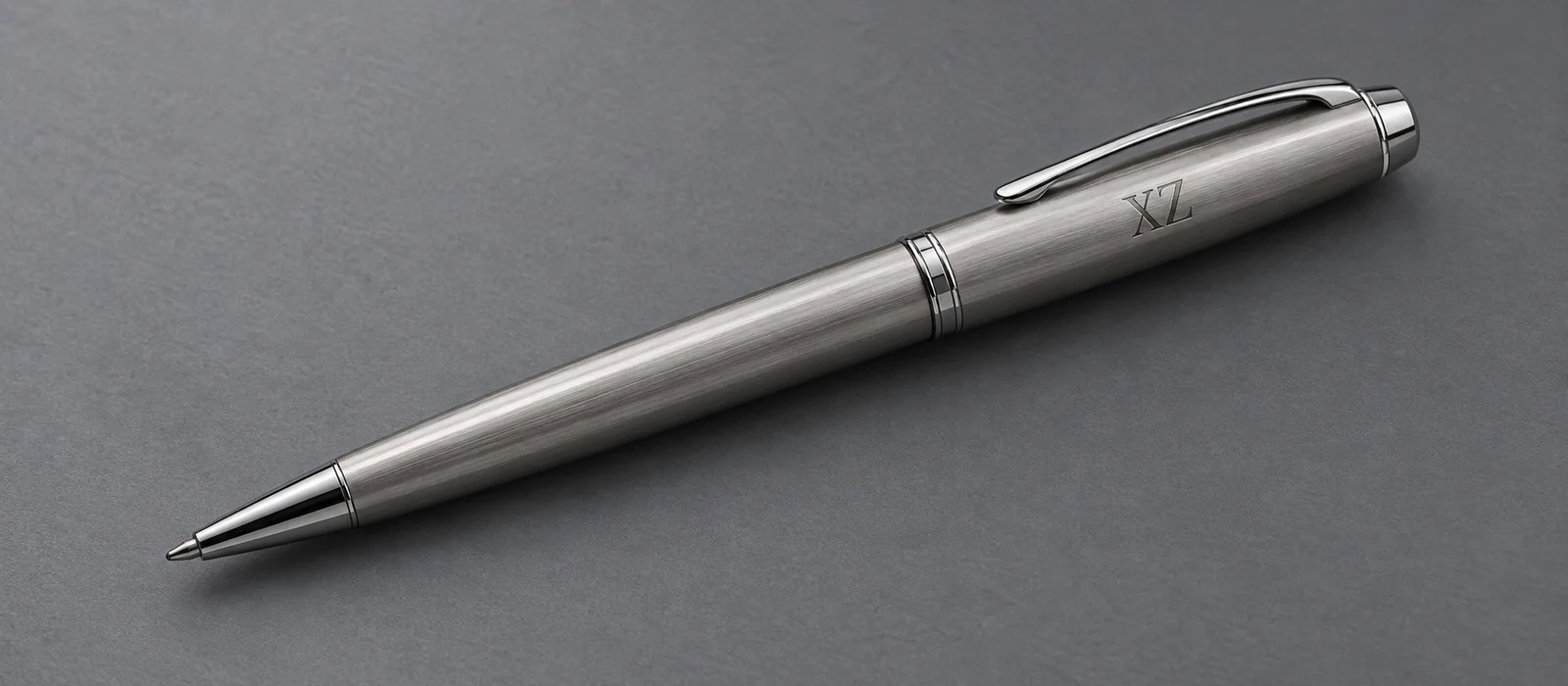
Corporate gifting looks like a taste decision and is mostly a constrained one. Two UK rules — one about VAT, one about deductibility — do more to determine what companies hand out than any designer does, and once you know them the category stops looking arbitrary.
The £50 rule
For VAT purposes, output tax does not have to be accounted for on business gifts to the same person as long as the total cost of all gifts to that person does not exceed £50, excluding VAT, in any twelve-month period.
Two features of that wording cause most of the trouble.
- It is cumulative. Four gifts of £15 to the same client in a year is £60, not four separate £15 gifts.
- It is a cliff, not a taper. Go over, even slightly, and the treatment applies to the total cost of gifts to that person, not just the excess.
For deductibility against profits the conditions are tighter still. To qualify, a gift must cost £50 or less per person per year, must not be food, drink, tobacco or vouchers exchangeable for those, and must carry a conspicuous advertisement for the business giving it.
Why that produces engraved objects
Read the three conditions together and the design brief writes itself.
The gift cannot be consumable, so it has to be an object. It has to carry a conspicuous advertisement, so it must bear a name or mark. And it should be worth keeping, or the advertising condition is satisfied by something that goes in a drawer.
An engraved object satisfies all three at once. The mark is permanent, so the advertisement does not wear off; it is integral rather than a printed label; and a well-made engraved piece survives the desk clear-out that ends most promotional items.
That is why the category is dominated by pens, desk pieces, glassware, small silver and plated items, clocks and paperweights — durable objects with a flat area that takes a mark.
What makes one worth keeping
- The mark should be secondary. A gift that is mostly logo is advertising with an object attached. A discreet mark on a good object is kept; a large mark on an indifferent object is not.
- Match the process to the material. Glass and crystal take blasting or laser (glass); silver and plate want a graver (silver); coated metals want the marking decision in laser marking metal.
- Watch the plating depth. On plated items an over-deep cut exposes base metal permanently. This is the commonest defect in cheap engraved gifts and it is invisible until it happens.
- Personalised beats generic, and dates it. A recipient’s name makes an object theirs. A year makes it expire.
Record keeping
Because the £50 limit is per recipient per twelve months, it has to be tracked per recipient: who received what, when, the net cost, the VAT and the business purpose. A spreadsheet is the standard answer, and the absence of one is what makes the rule expensive rather than the rule itself.
This page is orientation, not tax advice. The GOV.UK notice linked below is the primary source.