Simple ways to personalise your space
Six changes that make a room specific rather than generic — most of them done in an afternoon, none of them requiring a designer.
Generic rooms are not badly furnished; they are unspecific. Nothing in them refers to anyone. These are six changes that add reference, in rough order of how quickly they can be done.
1. Put one real thing where the decorative thing was
A shop-bought ornament occupies space. An object with a history occupies attention. A tool that belonged to someone, a piece brought back from somewhere, an engraved item with a date on it — one of these does more than a shelf of coordinated accessories.
The test is simple: could this exact object be in someone else’s house? If yes, it is decoration. If no, it is personalisation.
2. Lower the pictures
Almost every domestic picture is hung too high. The gallery standard puts the centre of the piece at 57 inches, about 145 cm, from the floor — average standing eye level, and the height used in museums and galleries. Dropping a picture by 20 cm costs one filled hole and changes how the whole wall reads.
3. Fix the lighting before buying anything else
Most rooms have one ceiling light and are lit like an office. Two or three low lamps at different heights change a room more than new furniture, and they are the cheapest change with the largest effect. Aiming light at something — a texture, a plant, an object — turns that thing into a feature and costs nothing beyond the lamp.
4. Use one wall
You do not need a scheme. One wall doing something — a colour, a paper, a group of frames, a run of shelves — is enough to stop a room being anonymous, and it is reversible.
If you are grouping frames, keep the frames consistent and the contents varied. That is what makes a wall look collected rather than cluttered.
5. Add texture, not more objects
Rooms that feel cold are usually short of texture rather than short of things. Textile is the quickest fix: a hanging, a rug, heavier curtains, a throw. Textile also absorbs sound, so a room with hard floors and plaster walls gets quieter as well as warmer. The families of wall art and what each does are set out in different types of wall art.
6. Mark things
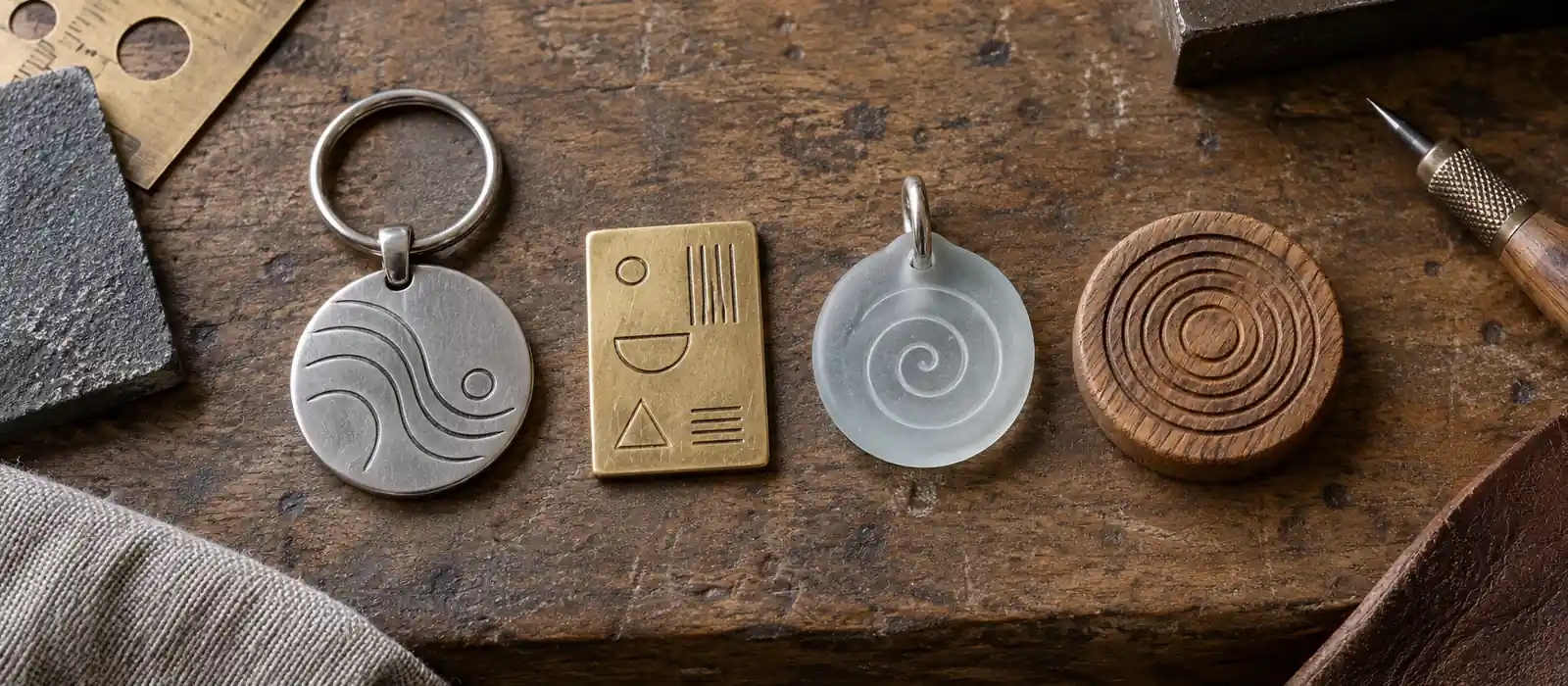
The literal sense of personalisation: putting a name, a date or an inscription on an object. It is the oldest form of the practice, and it works because a marked object stops being interchangeable. It is also why engraved pieces survive clear-outs — you cannot replace one with an identical one.
If you rent
Check the tenancy agreement before anything permanent. Private tenants usually need the landlord’s permission to paint or redecorate; council and housing association tenants usually can. If you ask and get a yes, get it in writing, and expect a condition about restoring the original state at the end. The reversible items on this list — lamps, textiles, leaned rather than hung frames, freestanding shelves, objects — need no permission at all. More detail in how to personalise your home on a budget.