Laser engraving: what the beam actually does
Engraving, etching, ablation and annealing are four different things a laser does to a surface. Which one you get depends on the wavelength, the power and the material, not on the word in the brochure.
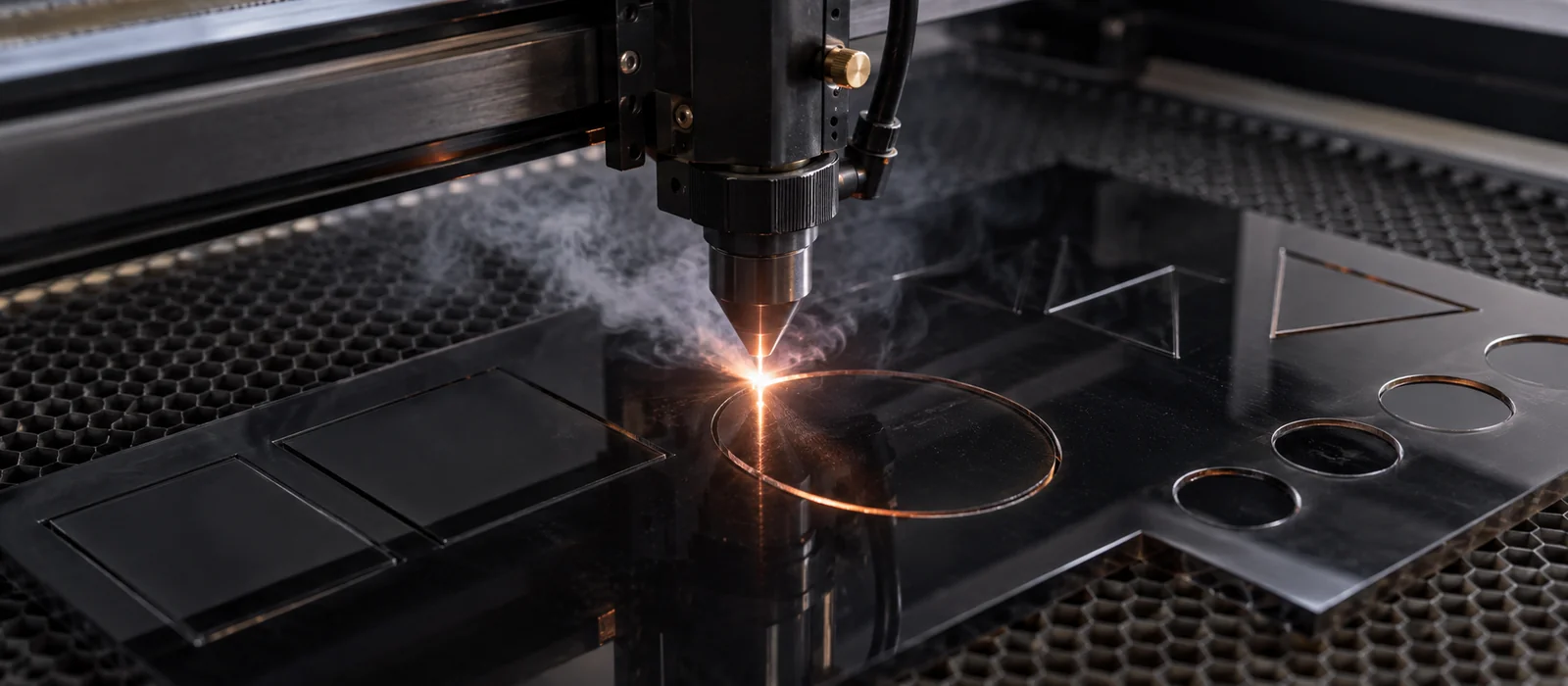
“Laser engraving” is used as a single word for at least four processes that leave visibly different results. Sorting them out is the whole of the subject.
The four things a laser can do
Engraving removes material to a measurable depth. You can feel the groove with a fingernail and, on metal, it survives abrasion because there is a physical cavity rather than a surface effect.
Etching — sometimes called shallow engraving — vaporises only a thin surface layer. On coated materials this is the useful one: it takes off the coating and stops.
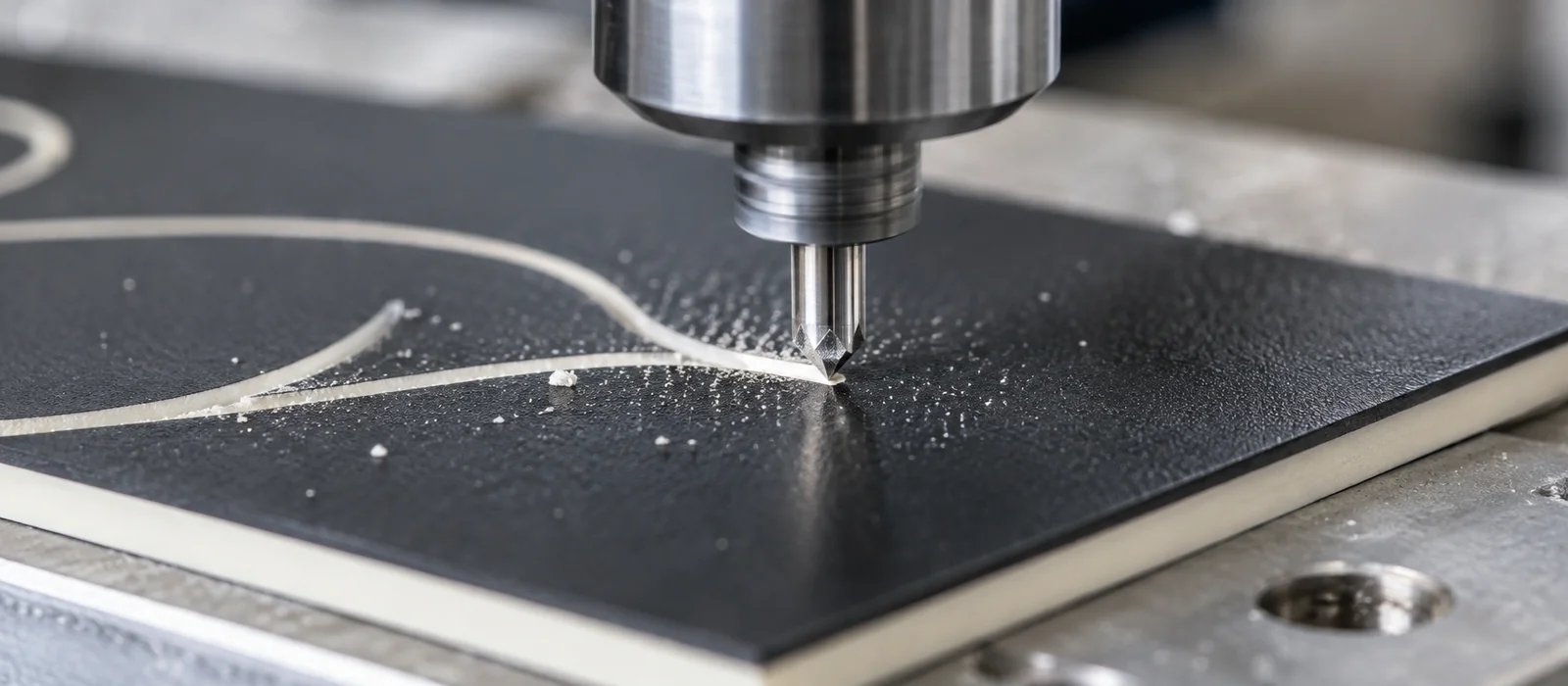
Ablation is the same idea framed from the coating’s point of view. The beam removes a paint, powder, laminate or anodic layer and reveals whatever is underneath, which is where the contrast comes from. Nothing happens to the substrate at all.
Annealing removes nothing. The beam heats the metal enough to grow an oxide layer, which reads as a dark mark, and the surface stays flat and unbroken.
The practical consequence: if a specification says “engraved to 0.2 mm” it is asking for material removal, and only the first process delivers it. If it says “must not break the corrosion barrier”, it is asking for the last one.
Wavelength decides what is possible
The dominant variable is not power but wavelength, because absorption is wavelength-dependent.
CO₂ lasers emit in the far infrared, around 10.6 µm. Organic and non-metallic materials absorb this well — wood, acrylic, leather, paper, coated and painted surfaces, and glass. Bare metal reflects it. A CO₂ machine cannot mark bare stainless steel without a marking compound painted on first; what it can do very well is burn away a powder coat or a laminate and let the substrate show through.
Fibre lasers emit near 1064 nm, in the near infrared. Metals absorb this efficiently, which is why fibre is the metal-marking tool: it supports surface annealing at low energy and deep engraving at high energy, on the same machine, by changing parameters rather than hardware.
UV lasers sit at the short end and work by breaking molecular bonds rather than by heating, which is why they are used where heat damage is the problem — thin films, sensitive plastics, glass.
Why the same file looks different on two machines
Three parameters do most of the work: power, speed and the number of passes. Raising power or dropping speed puts more energy into the same spot, which deepens the cut and widens the heat affected zone. On a coated material that trade-off is unforgiving. Take off just the coating and you get a crisp, high-contrast mark; go 20 % harder and you cut into the substrate, the edge frays, and the protective layer you were relying on is gone.
This is exactly the situation on anodised aluminium, where the anodic layer is both the colour and the corrosion protection. Removing it produces a bright silver mark on a coloured ground — high contrast, and no protection under the letters.
Where laser is the wrong answer
- Depth in metal. A groove deep enough to survive handling is faster and cheaper on a rotary machine for one-offs, and laser only wins once volume justifies the setup.
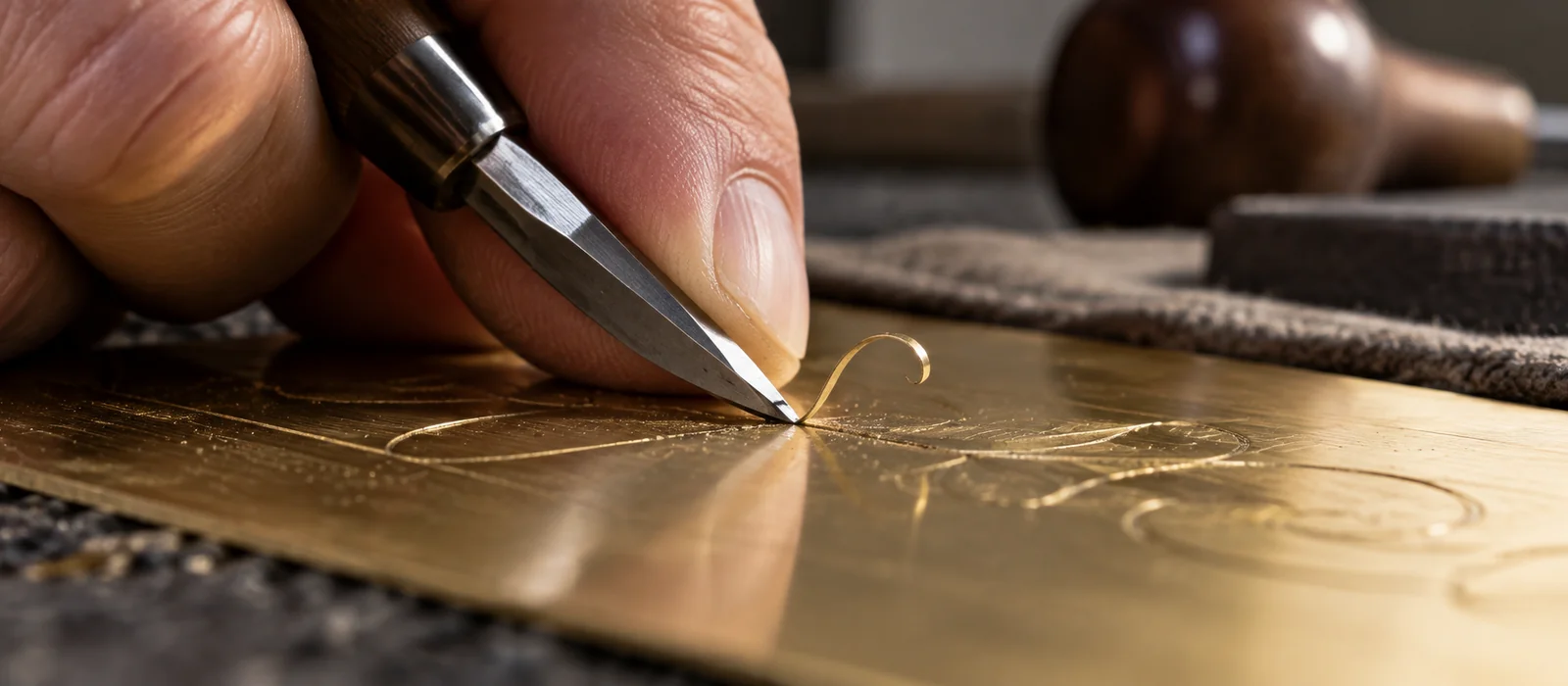
- Bright, faceted cuts. A laser mark is matte because it is thermal damage. The reflective, chiselled look of a bright cut only comes from hand engraving.
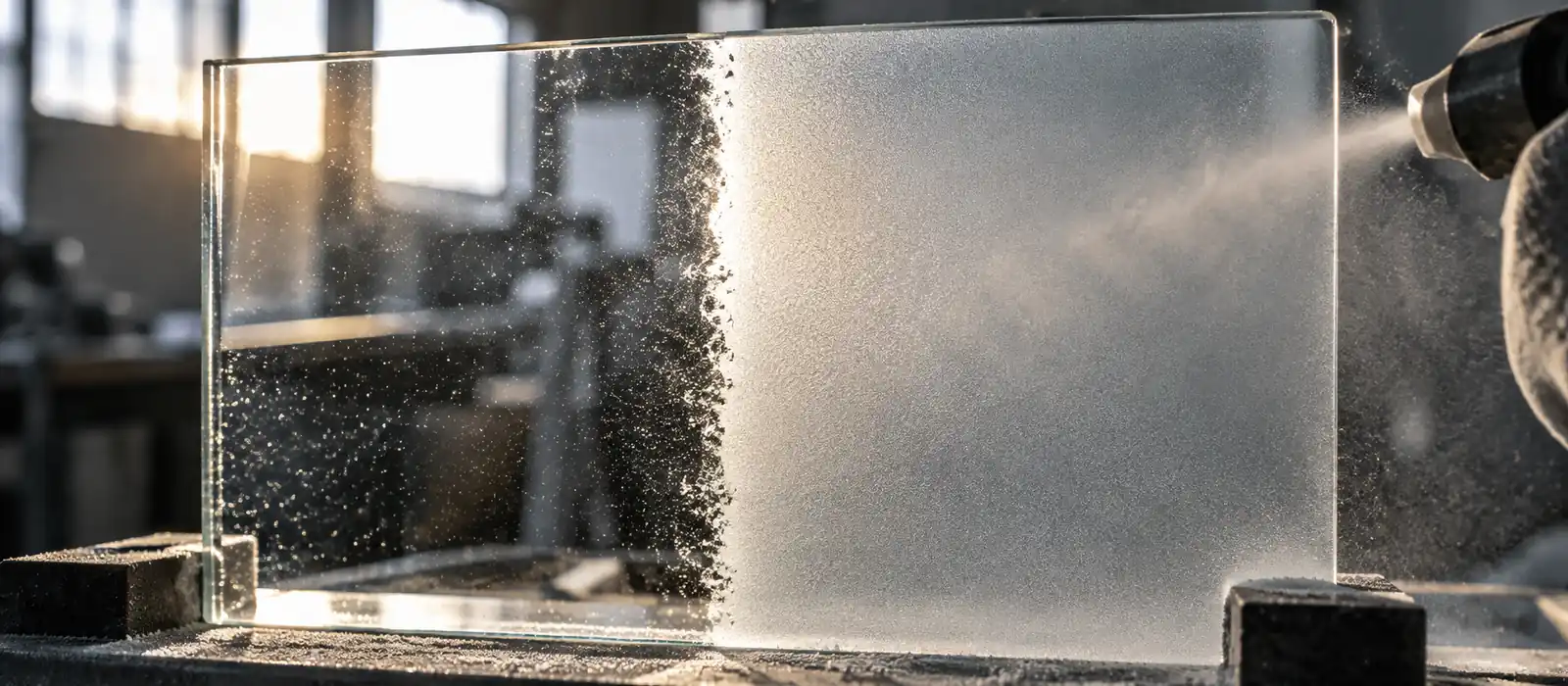
- Deep frosted areas on glass. Laser will frost glass, but a large frosted panel with a defined edge and depth is the natural territory of abrasive blasting.
- Anything where the coating must stay intact. If the anodic or passive layer is the point, the answer is annealing or dye-change, not engraving.