Rotary and diamond drag engraving
The mechanical processes: a spinning cutter that removes a chip, and a non-rotating diamond that ploughs a line. Different tools, different marks, different materials.
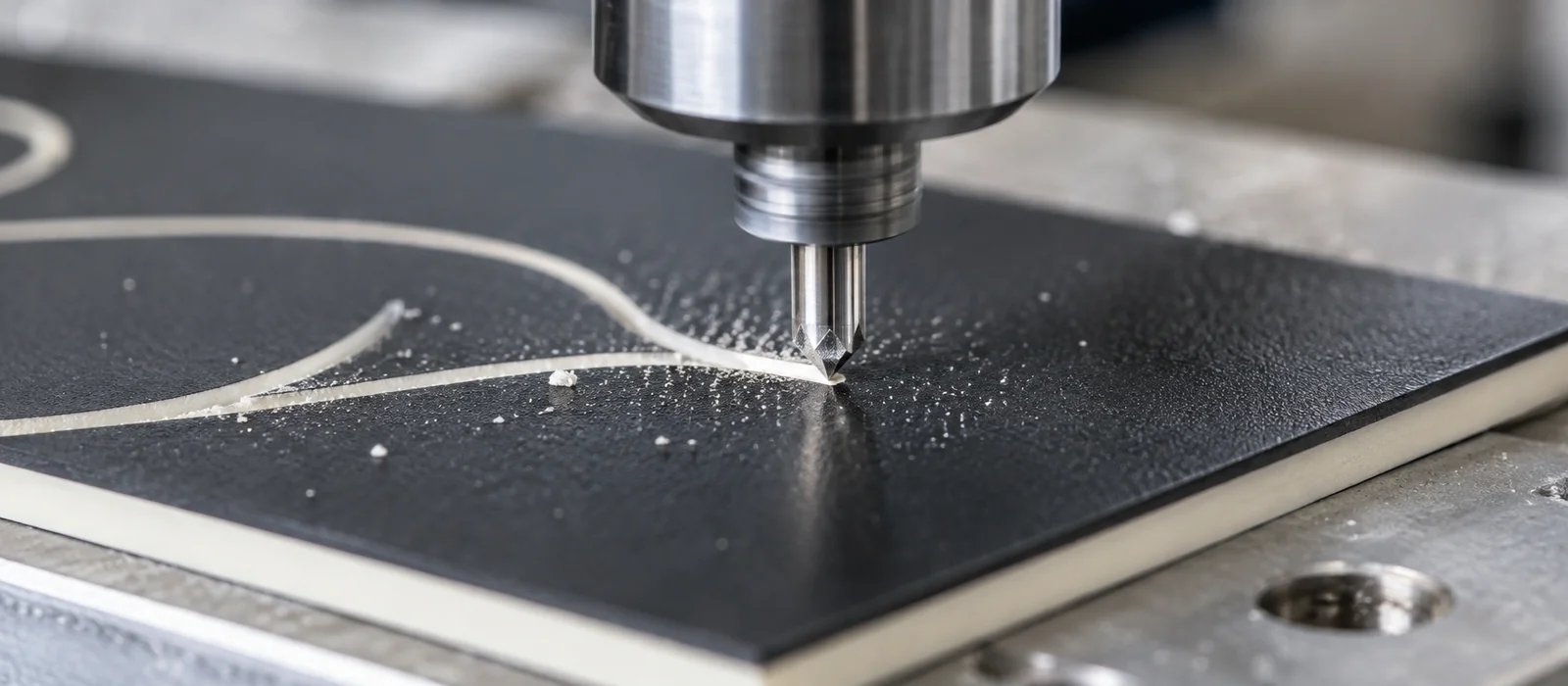
Rotary engraving is the mechanical process the trade ran on for most of the twentieth century, and it has not been displaced so much as narrowed. It still does things light cannot.
Rotary cutting
A motorised spindle turns a cutter, and the cutter is driven into the surface to a set depth while the table moves the workpiece under it. Material comes off as a chip. The groove produced has the shape and dimension of the cutter, so the tool geometry is the letterform’s cross section: a 0.5 mm half-round cutter and a 0.5 mm V-point cutter produce visibly different letters from the same file.
Two consequences follow from “the cut has a shape”:
- Depth is a number you set, not a side effect of power and speed. Where a drawing calls for a groove of a stated depth, this is the direct way to get it.
- Small text has a floor. The cutter has a physical width, so characters cannot be finer than the tool. Very small lettering is where a laser pulls ahead.
Cutters are made in micro-grain carbide, high-speed steel and diamond, and carbide and HSS cutters can be resharpened, which is why a working shop keeps a grinder rather than a bin.
Diamond drag
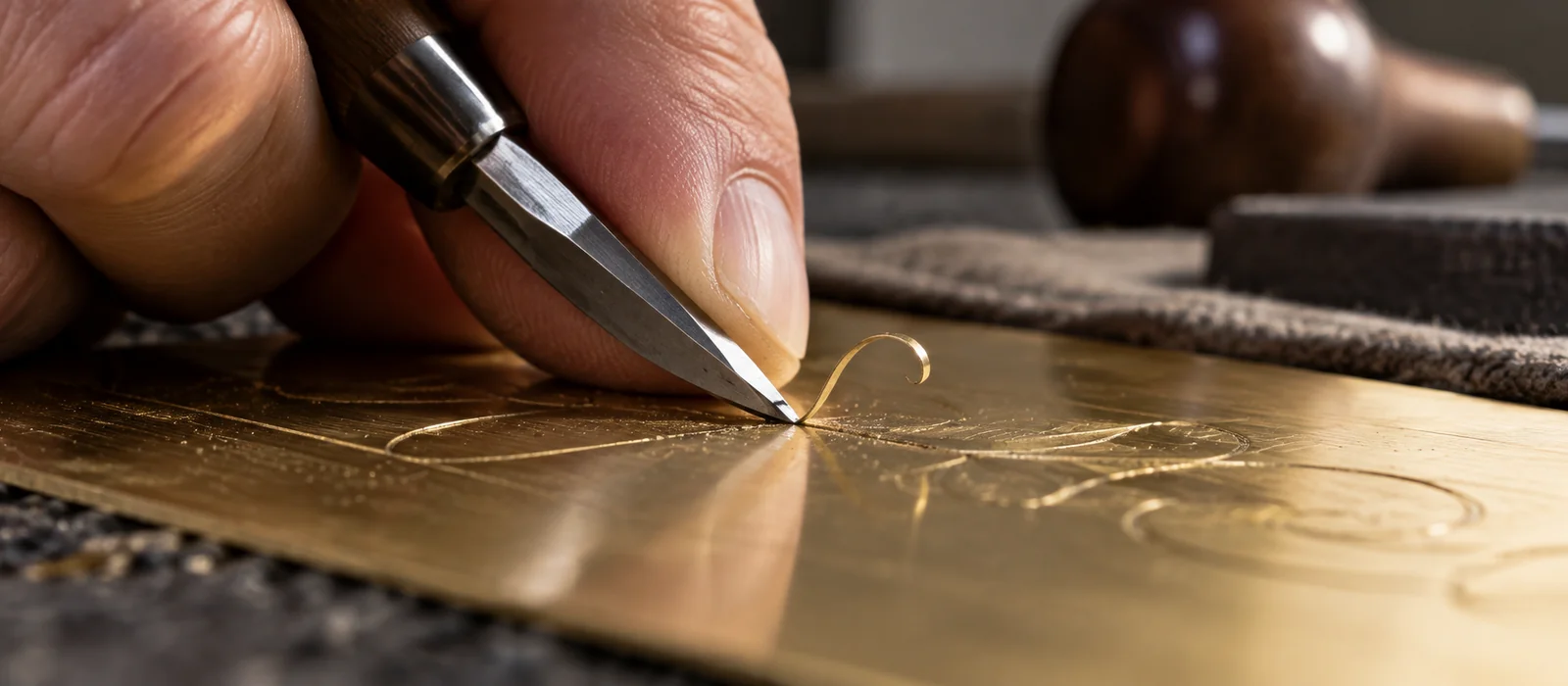
Diamond drag looks like rotary engraving and is not. The spindle does not turn. A diamond-tipped point is held under spring pressure and dragged across the surface, ploughing a fine line by displacing material rather than cutting a chip out of it.
That difference explains its whole behaviour:
- It makes almost no dust and no noise, because there is no chip and no cutting speed.
- It is fast, since there is no spindle load to respect.
- The line is fine and shallow — a scribed hairline, not a groove. It catches light and reads bright against a brushed or polished ground.
- It suits bare metal: brass, aluminium, stainless, silver, pewter. On a laminate it is useless, because a laminate needs the top layer cut through to reveal the core colour.
Burnishing is the same idea with a rotating tool held at very light pressure, polishing a bright line into a coated metal rather than scribing it. It sits between the two.
Choosing between them
| You want | Use |
|---|---|
| A groove of specified depth in metal or plastic | Rotary cutter |
| Colour contrast from a two-layer laminate | Rotary cutter, cut through the cap |
| A fine bright line on polished or brushed metal | Diamond drag |
| A mark on a coated metal, no depth wanted | Burnishing or diamond drag |
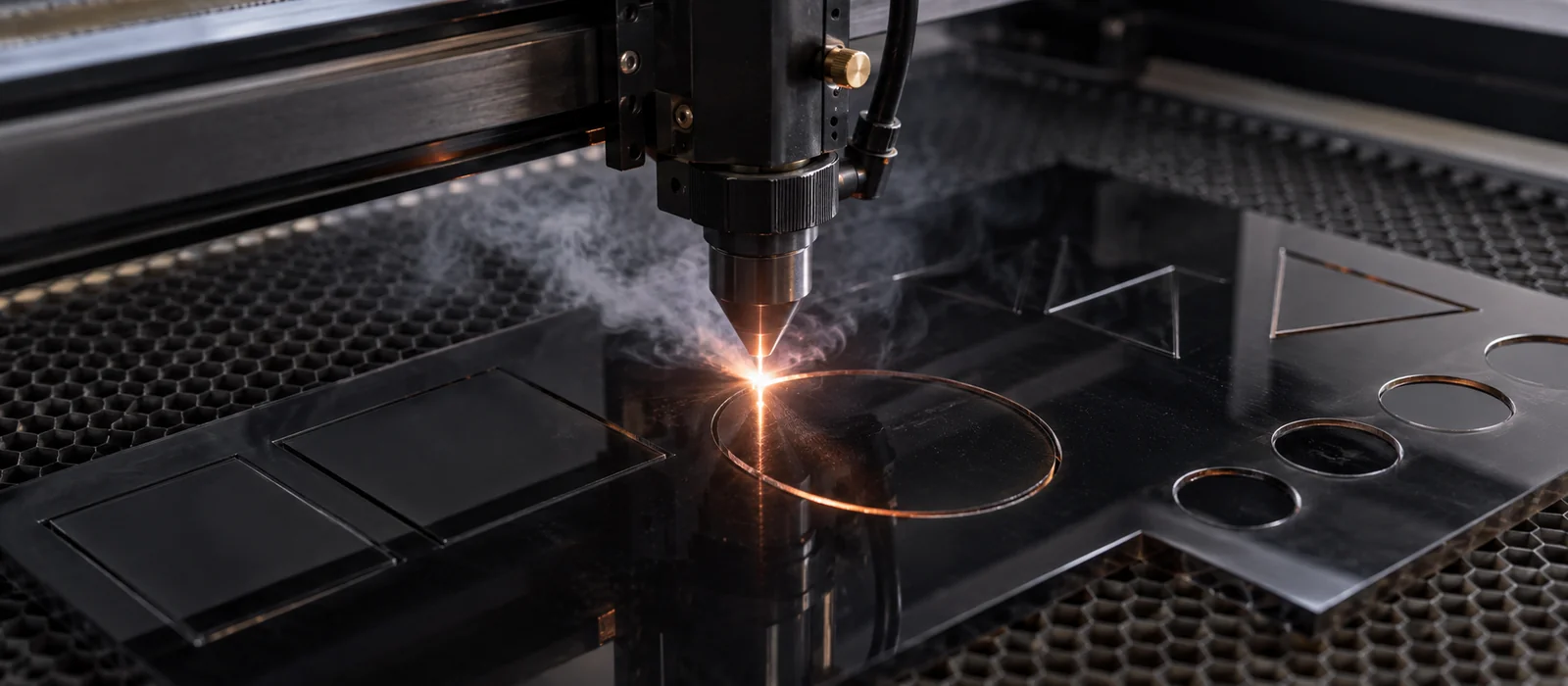
| Photographic or very small lettering | Laser |
Where it still wins
Rotary is the default for engraving laminate plates and control panel legends, for one-off deep marks in metal, and for anything where a cutter can reach a surface a flat laser bed cannot — a curved trophy cup, the inside of a ring, a recessed panel. It is also the process that scales down well: a single plate does not need a setup routine, it needs a cutter and a depth stop.