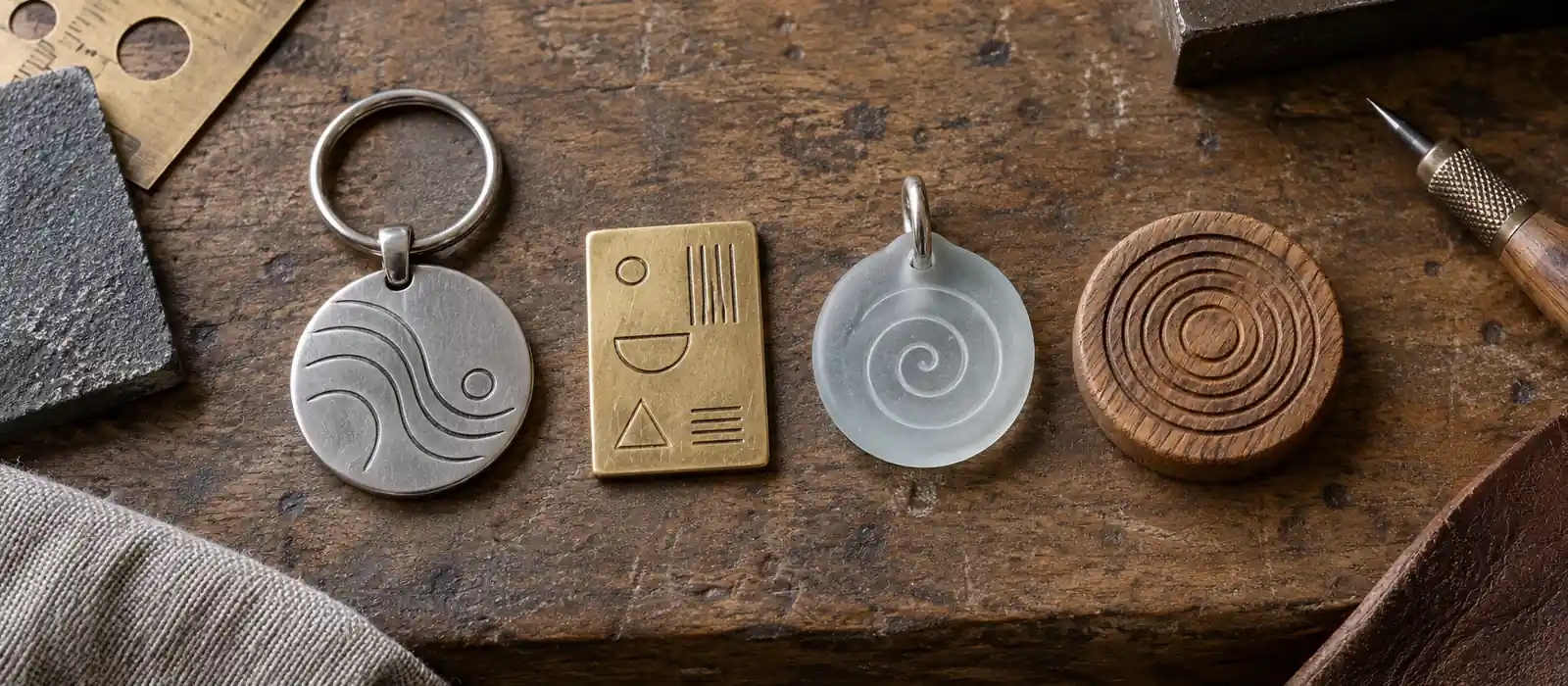
Types of wall decor you can use in your home
Murals and paintings, wallpaper and paint, lighting, wood, modern and traditional wall art, and abstract pieces — the six options, and what each one actually asks of a room.
Wall decor is the part of a room people postpone, and then solve badly under time pressure. The choice is wide enough to be paralysing, so it helps to reduce it to six options and ask what each one demands in return.
The order below follows the version of this article that stood on this site in 2019; the reasoning is new.
Paintings and murals
The fastest way to change a room, and the least reversible. A mural can cover a whole wall or a panel of one, and the decision to commit the whole wall is the one that matters — a full-wall mural becomes the room’s subject, and everything else in it becomes furniture arranged around a picture.
Before choosing, settle four things in this order: colour, theme, size, style. Colour first, because it is the one that will fight the rest of the room if it is wrong, and the one you cannot adjust afterwards.
Wallpaper and paint
Often not counted as decoration at all, which is a mistake — it is the largest decorative surface in any room by a wide margin.
Paint does more than cover. Blocks of colour, geometric shapes, a painted arch behind a chair, a band at picture-rail height: these are decoration made from nothing but a tin and masking tape, and they are the cheapest transformation available. Wallpaper carries pattern and texture that paint cannot, and a single papered wall is the standard way to get pattern into a room without committing to it everywhere.
Lighting
The option most often forgotten, and the one that changes a wall most for the least money.
Light is decoration when it is aimed. A wall washer grazing a textured surface makes the texture visible; a small spot on a sculpture or a plant throws a shadow that is itself an object; LED strip concealed behind a headboard or a shelf turns the wall into a soft-edged plane. Nothing on the wall has changed, and the wall looks different.
Wood
For a warmer, more traditional feel, wood does something no flat finish does: it brings grain, depth and a physical surface.
Two scales. Cladding a wall — boards, panelling, slats — changes the room’s whole character and its acoustics. A single carved or turned wooden piece hung as art does the opposite: it holds one point of attention against a plain ground. Both work; doing both at once usually does not.
Modern and traditional wall art
The advice in the original version of this piece was to pick one rather than mix, and it is broadly right — not because mixing is forbidden but because it takes more skill than committing.
- Modern — wall panels, bold blocks of colour, posters, graphic and sculptural pieces.
- Traditional — paintings in the older manner, intricate pattern, wallpapers, mirrors, decorative decals.
The historical depth here is worth a moment. Wall hangings are one of the oldest forms of domestic decoration in Europe, and the surviving evidence is thin because textiles perish. The Bayeux Tapestry — 70 metres long, depicting the events leading to the Norman Conquest of 1066, and in fact an embroidery rather than a woven tapestry — is famous partly because it is the only survivor of its kind, though documentary sources show that this type of hanging was a common way for families to display their story. Putting art on a wall to say who you are is not a modern impulse.
Abstract pieces
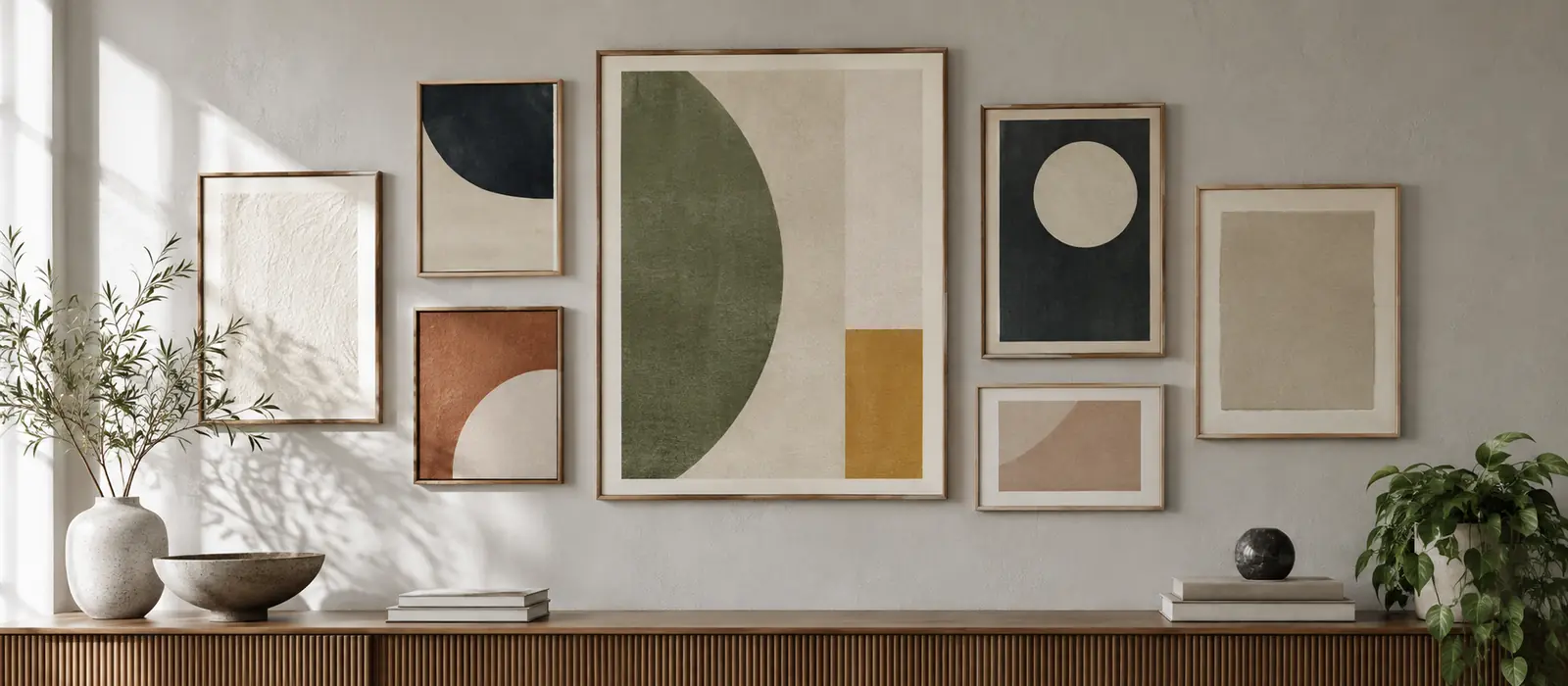
Abstract art is the easiest way to make a room feel personal, because it carries no subject to argue with. It coordinates with a colour scheme rather than competing with it, and it is the natural home for texture — geometric forms, three-dimensional relief, mixed materials.
Hanging it
Whatever you choose, the height decides whether it works. The gallery convention is to place the centre of the piece at 57 inches (about 145 cm) from the floor, which is roughly average standing eye level and the reference museums use. Art hung higher — the common domestic error — reads as floating and disconnected from the room.
Two exceptions. Above furniture, the bottom of the frame usually wants to sit somewhere around 15–30 cm above the sofa or bed rather than obeying the 57-inch line. And in a room with very high ceilings, the rule needs adjusting upward or the whole wall looks bottom-heavy.